Benign vs. Malignant Mole: Key Differences You Should Know

Benign vs. Malignant Mole: Key Differences You Should Know

Skin changes are common, and many people have moles that remain harmless throughout their lives. However, some moles may develop unusual features that could indicate skin cancer. Knowing the difference between a benign vs. malignant mole is important because early identification of suspicious skin changes can support faster medical attention and better outcomes.

benign vs. malignant mole


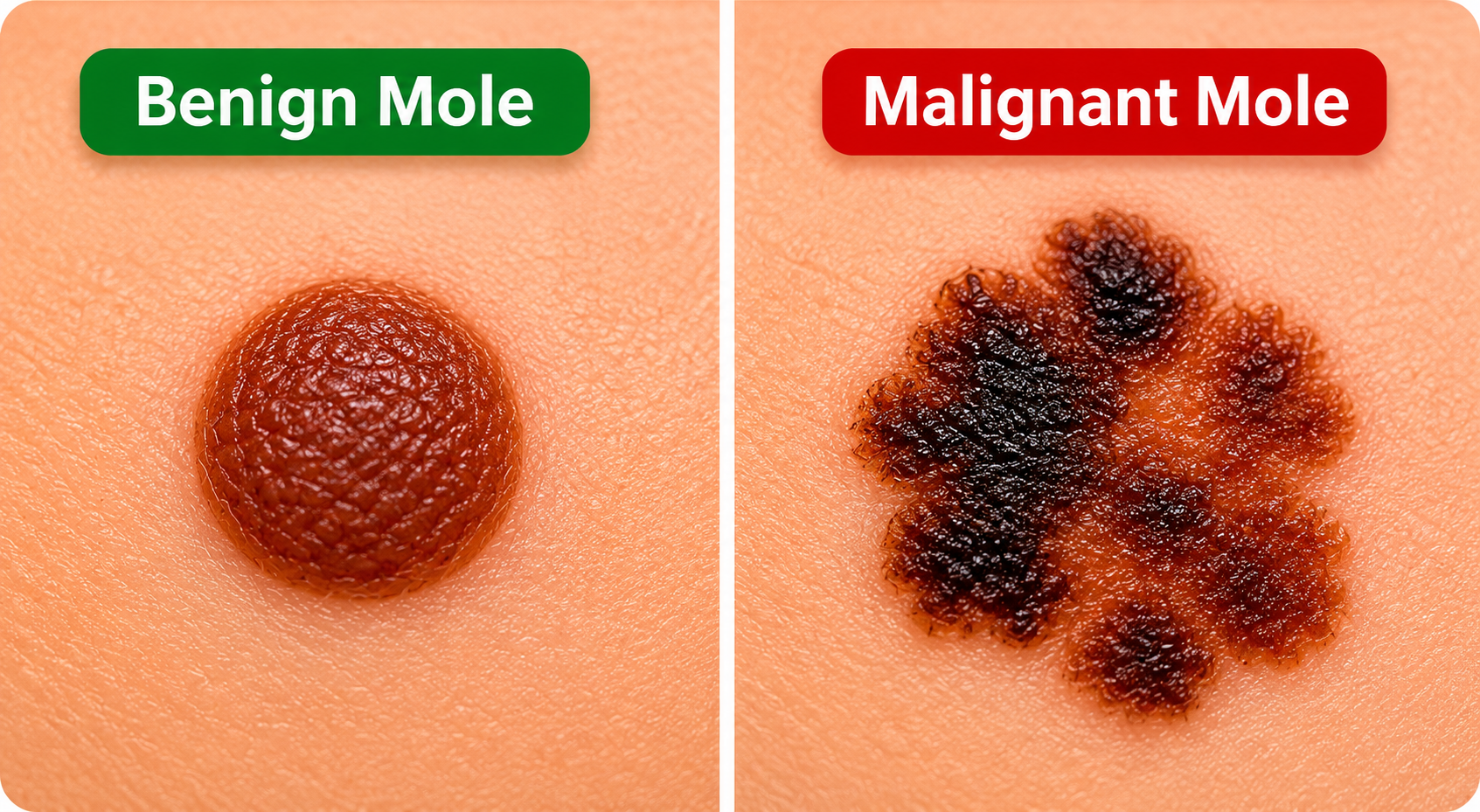
A benign mole is usually stable in shape, size, and color, while a malignant mole often changes over time. These changes may include uneven borders, multiple colors, growth in size, itching, bleeding, or crusting. Although not every unusual mole is cancerous, visible skin changes should never be ignored.


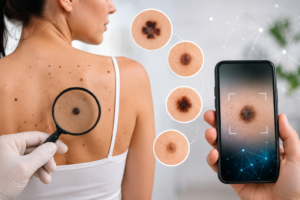
At SkinToScan, AI and Machine Learning technology are used to support digital skin analysis and help users monitor suspicious skin lesions through advanced image-based assessment tools. AI-supported skin monitoring can help individuals identify concerning changes earlier and seek professional evaluation when necessary.


Understanding the Difference between Benign and Malignant Moles


Benign moles are non-cancerous growths formed by clusters of pigment-producing skin cells called melanocytes. They are extremely common and may appear during childhood, teenage years, or adulthood. Most benign moles have a smooth border, even color, and symmetrical shape. They often stay unchanged for many years.


Malignant moles are different because they may contain cancerous cells or develop into melanoma. These moles usually appear irregular and may continue evolving over time.


Dermatologists often recommend watching for visible differences using the ABCDE rule. A malignant mole may look asymmetrical, develop uneven edges, show different shades of brown or black, become larger than normal, or change rapidly in appearance.


One important sign people often overlook is the “ugly duckling” mole. This refers to a mole that looks noticeably different from the rest of the moles on the body. Even small differences can sometimes indicate a serious issue that requires medical review.


Regular skin monitoring is important because melanoma can progress quickly if left untreated. Identifying suspicious moles at an early stage can significantly improve treatment success.


Early Melanoma Signs You Should Not Ignore


Recognizing early melanoma signs can help people take action before the condition becomes more advanced. Melanoma may begin as a tiny visible change in the skin and can sometimes resemble an ordinary mole during its early stages.


Some common warning signs include changes in color, irregular borders, sudden enlargement, bleeding, itching, tenderness, or crusting. In certain cases, melanoma may appear as a completely new dark spot on the skin rather than an existing mole.


Many individuals delay medical evaluation because the mole does not cause pain. However, skin cancer may develop silently without obvious discomfort. This is why routine skin checks are strongly recommended, especially for people with multiple moles or a history of excessive sun exposure.


People who spend long periods outdoors, frequently use tanning beds, or have fair skin may have a higher risk of developing melanoma. Family history can also increase risk levels. Monitoring skin changes consistently can help detect unusual developments earlier.


Digital skin analysis tools powered by AI and Machine Learning are becoming increasingly useful for tracking mole appearance over time. Platforms like SkinToScan help users observe visible skin changes and identify patterns that may require further medical attention.


Other Skin Cancer Symptoms to Watch For


Melanoma is not the only form of skin cancer. Two other common types are basal cell carcinoma and squamous cell carcinoma. Understanding their symptoms is also important because they can sometimes resemble harmless skin conditions during early stages.


Basal cell carcinoma symptoms often include shiny bumps, red patches, open sores, or areas that repeatedly bleed and heal. These growths commonly develop on sun-exposed areas such as the face, neck, scalp, and arms. Basal cell carcinoma usually grows slowly, but treatment is still necessary to prevent deeper skin damage.


Similarly, squamous cell carcinoma symptoms may appear as rough, scaly patches, wart-like growths, crusted lesions, or sores that do not heal properly. In some cases, these lesions may become painful or inflamed over time. Squamous cell carcinoma can spread if ignored, making early detection important.


Because different skin cancers can look similar, it is not always easy to identify dangerous lesions through visual inspection alone. This is why many people now use AI-supported skin analysis tools as part of regular monitoring.


How AI and Machine Learning Support Skin Analysis

AI and Machine Learning technology are changing how people monitor skin health. Platforms like SkinToScan use advanced image analysis systems designed to identify irregular skin patterns and assist users in recognizing potentially suspicious lesions.


AI-supported systems can compare mole characteristics such as shape, border irregularity, color variation, and visible changes over time. This can help users become more aware of developing skin abnormalities and encourage earlier medical consultations.


Although AI tools are not a replacement for professional diagnosis, they provide an additional layer of support for individuals who want to track visible skin changes more consistently. Regular self-checks combined with professional evaluations remain important for accurate diagnosis and treatment planning.

Final Thoughts


Understanding the difference between a benign vs. Malignant Mole is an important step in recognizing suspicious skin changes early. While many moles are harmless, some changes may indicate melanoma or other forms of skin cancer that require medical attention.


Awareness of early melanoma signs, basal cell carcinoma symptoms, and squamous cell carcinoma symptoms can help people respond more quickly when unusual skin changes appear. Monitoring the skin regularly, limiting excessive UV exposure, and seeking professional advice for evolving lesions are all important parts of long-term skin care.


SkinToScan uses AI and Machine Learning technology to support digital skin monitoring and help users identify suspicious skin changes through advanced skin analysis tools.


Monitor Your Skin With AI Technology

With the support of AI-powered tools like SkinToScan, you can monitor visible skin concerns more effectively and stay aware of changes that may require medical attention.

Start Your Skin Scan →


Frequently Asked Questions

1. What is the difference between a benign and malignant mole?

A benign mole is non-cancerous and usually remains stable, while a malignant mole may show irregular changes and could indicate skin cancer.

2. What are common Early Melanoma Signs?

Common signs include asymmetry, uneven borders, color variation, itching, bleeding, and rapid changes in a mole’s appearance.

3. What are Basal Cell Carcinoma Symptoms?

Symptoms may include shiny bumps, red patches, non-healing sores, or scaly skin growths on sun-exposed areas.

4. What are Squamous Cell Carcinoma Symptoms?

These symptoms often include rough patches, crusted sores, wart-like growths, and persistent skin lesions.

5. How does SkinToScan support skin monitoring?

SkinToScan uses AI and Machine Learning technology to support digital skin analysis and help users monitor suspicious moles and skin lesions over time.

GET DISCOUNT CODE
Skin2Scan loyalty member

This field is required

Sign up to our newsletter and get 15% off discount code


rn

Unlock exclusive deals awaiting you

Your exclusive code is ready! Copy it now!

Get 10% off now!