In a clinic, skin cancer is diagnosed by a trained clinician: they look at the skin, often use a dermatoscope, and may take a biopsy that a pathologist reads. A photo tool does not do those steps. It can only screen one image for visual patterns and suggest whether a closer look is worth discussing with a doctor.
How a clinic actually diagnoses
Detection in practice is a sequence, not a single screenshot:
- History and full-skin exam. A clinician asks about change, symptoms, sun history, and family history, then inspects the skin — including places a phone camera rarely reaches well.
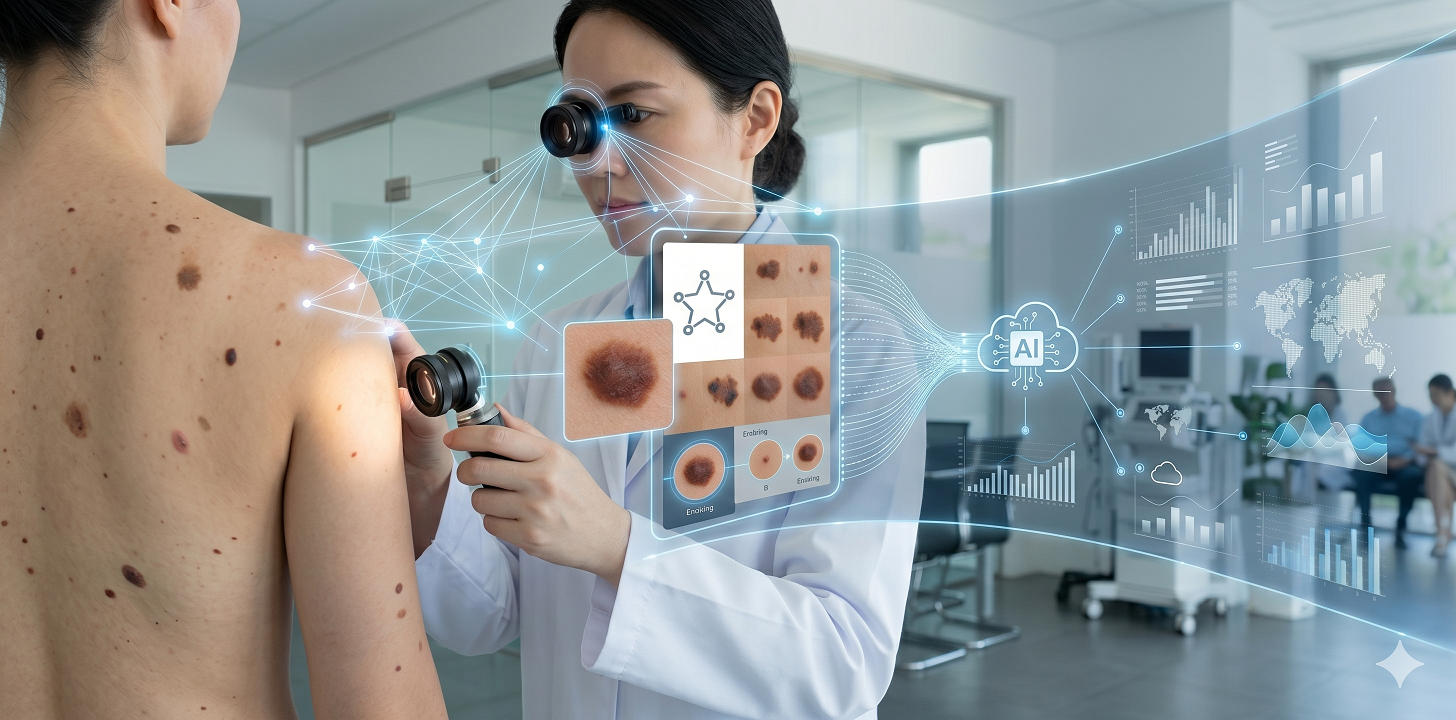
- Dermoscopy. A magnified, polarized or oil-immersion view of the lesion. This is still an examination of real skin, not an uploaded file.
- Biopsy when needed. Tissue is removed and examined under a microscope. That is how cancer is confirmed or ruled out. No app result substitutes for it.
The American Academy of Dermatology’s skin cancer overview is a public starting point for types, prevention, and when to see a dermatologist. It does not turn a home photo into a diagnosis.
Where a photo tool sits in that sequence
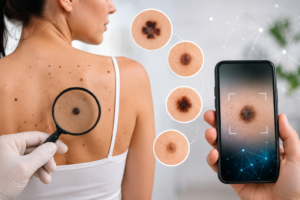
An image-based product can help you notice a pattern on a clear photo and decide whether to book an appointment sooner. It cannot feel the lesion, cannot see the whole body, cannot perform dermoscopy, and cannot read a biopsy.
SkinToScan is that kind of screening product. The public workflow is on the health analysis tool. A longer product explanation — photo in, screening insights out, and what the result is not — is in how the SkinToScan tool works.
What a photo cannot settle
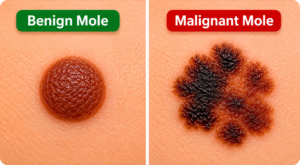
A reassuring screen does not mean a changing mole is fine. A concerning screen does not mean you have cancer. Either way, the next medical step is a person who can examine you. If you are looking for warning-sign language rather than clinic process, use the ABCDE checklist and then a clinician.
Do not wait for a “complete” set of symptoms. A sore that does not heal, a new or changing spot, or a mole that looks unlike the rest of your skin is already a reason to be seen.
Keep the two jobs separate
Clinic detection answers “is this cancer?” with examination and, when needed, tissue. Photo screening answers “does this image show a pattern worth checking?” SkinToScan only does the second job.