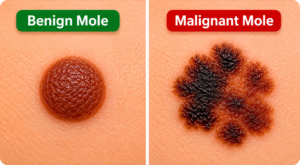
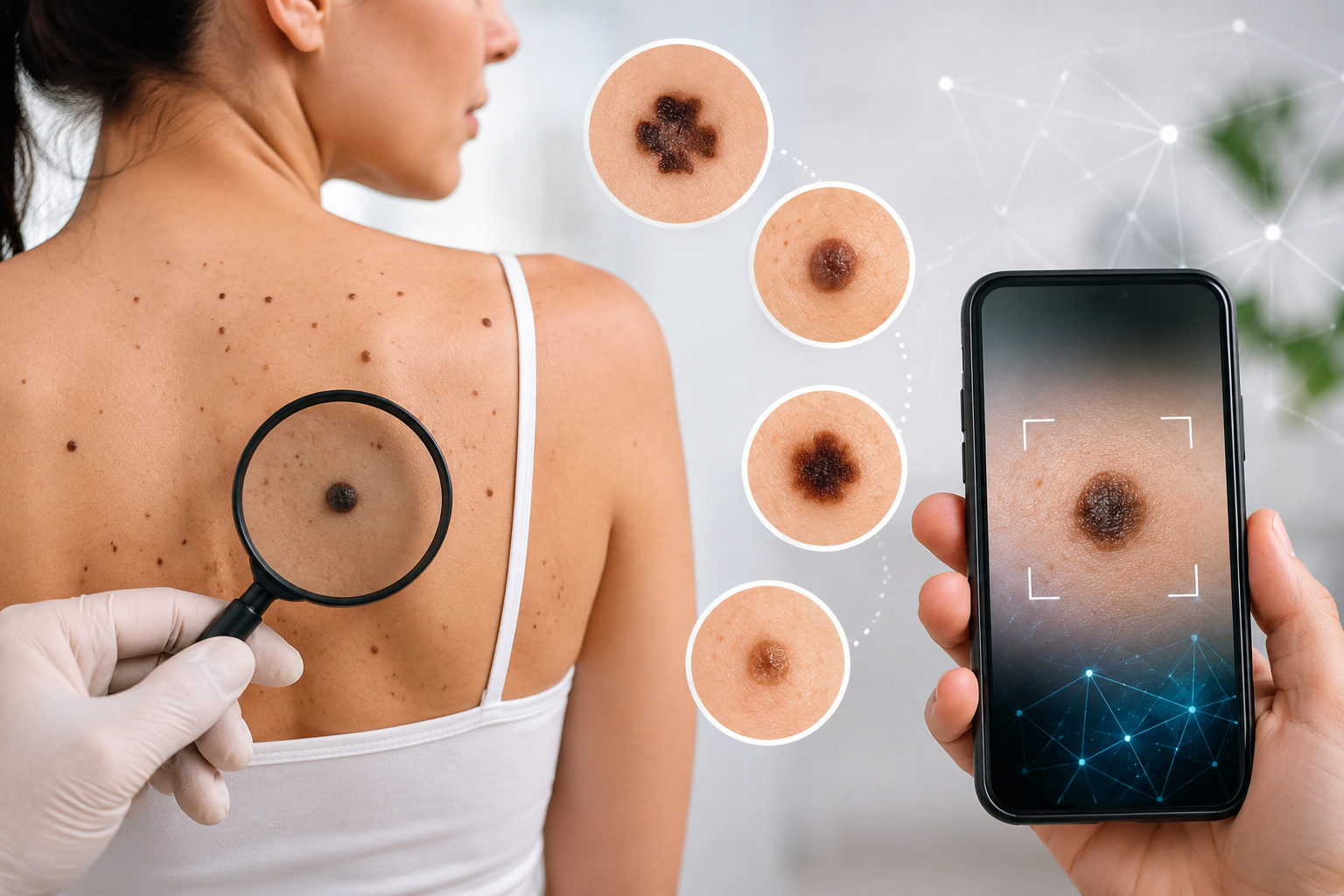
Book a clinician if a mole is changing, looks unlike your other moles, itches or bleeds, or is a new spot you cannot explain. You do not need several warning signs stacked together. One of those reasons is enough. A photo tool can add a structured look at an image; it does not replace that appointment.
Changes that mean “schedule soon”
Treat these as appointment triggers, not as a self-diagnosis:
Do not wait on these
- Change in size, shape, or color
- Itching, tenderness, crusting, or bleeding without an injury
- A sore that does not heal
- A mole that looks different from all the others on your body
- A new spot in adulthood that keeps evolving
The same cues are spelled out, letter by letter, in the ABCDE guide. Diameter is not a free pass: the AAD notes that melanoma can be smaller than 6 mm. Read their ABCDEs of melanoma page if you want the primary wording.
One half unlike the other
Irregular or poorly defined
More than one shade
Often >6 mm; can be smaller
Any noticeable change
What can wait for a routine visit — and what cannot
A mole that has looked the same for years, matches its neighbors, and has no symptoms is usually something to mention at a regular skin check rather than an emergency department. Rapid change, bleeding, or a spot that stands out from the rest should not sit on a “watch and wait” list at home.
Pain is a poor filter. Skin cancer can be quiet. Lack of pain is not reassurance.
How a photo tool fits (and where it does not)
If you already have a clear photo and want a screening look at that image, use the health analysis tool. What an online photo check can and cannot show is explained in online mole analysis. Neither page is a clinic. A calm result does not cancel a changing mole.
For a wider map of skin-cancer topics (types, prevention, clinical assessment), use the Info hub. Specific warning-sign questions belong on the ABCDE article, not on a general hub.
Next step
The next step is a clinician who can see the real skin. Use SkinToScan only as an extra look at a photo, never as permission to skip that visit.